
MoroccoInternational
AR·EN·FR
Professional interpreting

Conference & Event Interpreting

Conference & Event Interpreting is most useful when the workflow is designed around the content’s real purpose rather than treated as a generic language task. LeTraducteur.org defines the audience, references, review depth and delivery conditions before production begins.

Conference interpreting infrastructure

Booths, consoles, language distribution and AV — specified as one system

A multilingual event is only as reliable as its complete signal path. Booths, floor audio, interpreter consoles, language channels, participant receivers, video return, recording, power, network and spares are planned as one technical system.

Read the detailed equipment specification →

Mobile and permanent interpreter booths

Current planning should reference ISO 17651-1:2024 for permanent booths, ISO 17651-2:2024 for mobile booths, and ISO 20109:2025 for simultaneous-interpreting equipment and the sound/image delivered to interpreters and audiences.

  • Acoustic isolation and internal absorption suitable for continuous speech work.
  • Clear sightline to speakers, presentation screens and stage activity; low-latency video return where direct view is insufficient.
  • Low-noise ventilation, controllable lighting, acoustic worktop and safe cable entry.
  • Power, data and console positions arranged so interpreters can enter, leave and work without disturbing colleagues.
  • Booth location coordinated with audience seating, loudspeakers, cameras, emergency routes and venue fire/safety rules.
Up to 2 interpretersMinimum internal planning envelope: 1.60 m × 1.60 m × 2.00 m.
Up to 3 interpretersMinimum internal planning envelope: 2.40 m × 1.60 m × 2.00 m.
Up to 4 interpretersMinimum internal planning envelope: 3.20 m × 1.60 m × 2.00 m.
Equipment families shown on LeTraducteur.org are reference examples for planning. Final brand, model, quantity and local availability are confirmed after room plan, language count, audience capacity, venue infrastructure and rental/integrator stock are verified.

Complete technical signal chain

01

Floor capture

Lectern, gooseneck, handheld, lavalier or conference microphones; clean floor feed through mixer/DSP to interpreters.

02

Interpreter position

One console per interpreter position, professional headset/mic, floor/relay selection, outgoing channels, mute/cough, level and tone.

03

Language distribution

Digital infrared, wired or IP distribution. Reference families may scale to many channels; Bosch INTEGRUS supports up to 32 audio channels.

04

Audience reception

Pocket receivers or participant units, headphones/earpieces, labelled channel map, charging, cleaning and an operational spare pool.

05

Visual return

Direct sightline or low-latency video of speakers, slides and program feed so interpreters can follow gestures, names and visuals.

06

Recording & streaming

Separate floor/interpretation outputs where required, encoder/streaming interfaces, permissions and clear channel naming.

07

Power & network

Dedicated power, UPS on critical devices, network switches/PoE where applicable, safe cable management and controlled IP transport.

08

Redundancy & technician

Spare receivers/headsets, backup microphones, replacement console/interface, power/network spares and onsite interpretation/AV support.

Planning quantities — confirmed after venue survey

BoothsUsually 1 booth per active target language in a conventional onsite simultaneous setup, subject to relay and room design.
Interpreter consolesNormally 1 working console per interpreter position, with spare capability for critical events.
Receivers1 per participant who needs interpretation, plus an operational reserve sized to attendance and turnover risk.
Headsets / earpieces1 per active receiver plus cleaned spares; assistive-listening devices added separately where required.
IR radiators / antennasNumber and placement follow room size, geometry, obstructions, lighting and measured coverage—not a fixed ratio.
TechniciansSized to rooms, languages, hybrid links and changeover complexity; larger events may need dedicated interpretation and AV leads.

Commissioning before doors open

Channel mapTest every language, floor channel, relay route and receiver label end-to-end.
Booth testVentilation, lighting, sightline, console, headset, microphone and relay functions at each position.
Coverage testWalk-test audience listening zones; verify no dead spots/interference and confirm spare receivers.
Audio qualityConfirm gain structure, intelligibility, no clipping/feedback and suitable interpreter listening level.
Video / hybridVerify lip-sync, presentation return, remote audio, mix-minus and fallback connectivity.
ContingencyConfirm spare equipment, batteries/charging, UPS, emergency contacts and replacement procedure.

Reference equipment families — model confirmed after survey

Planning references only: final brand, model and stock are confirmed with the venue and local rental/integration partner.

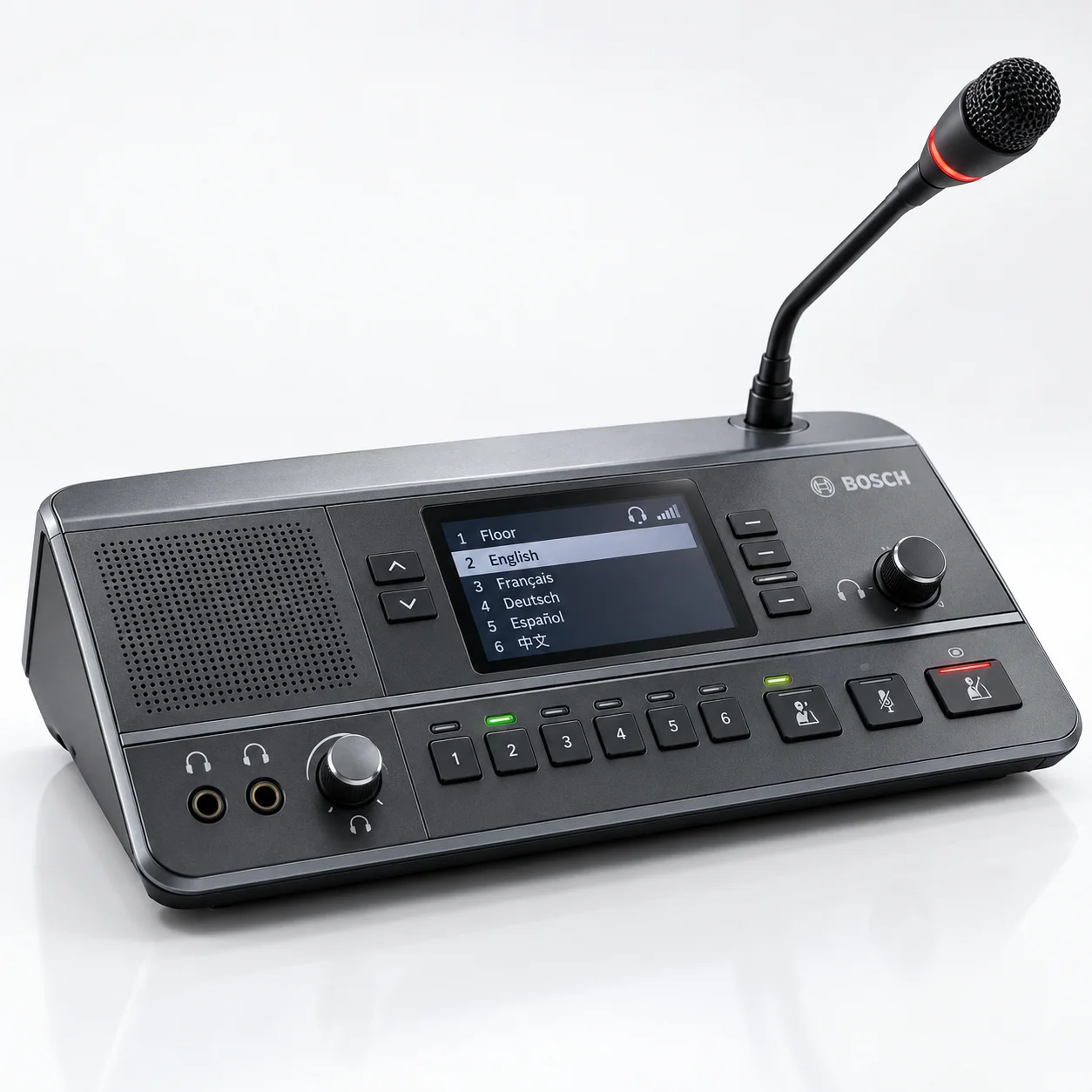
Bosch

DICENTIS / INTEGRUS

  • IP-based conference architecture
  • Interpreter desks and language selection
  • Digital infrared language distribution
  • INTEGRUS supports up to 32 audio channels
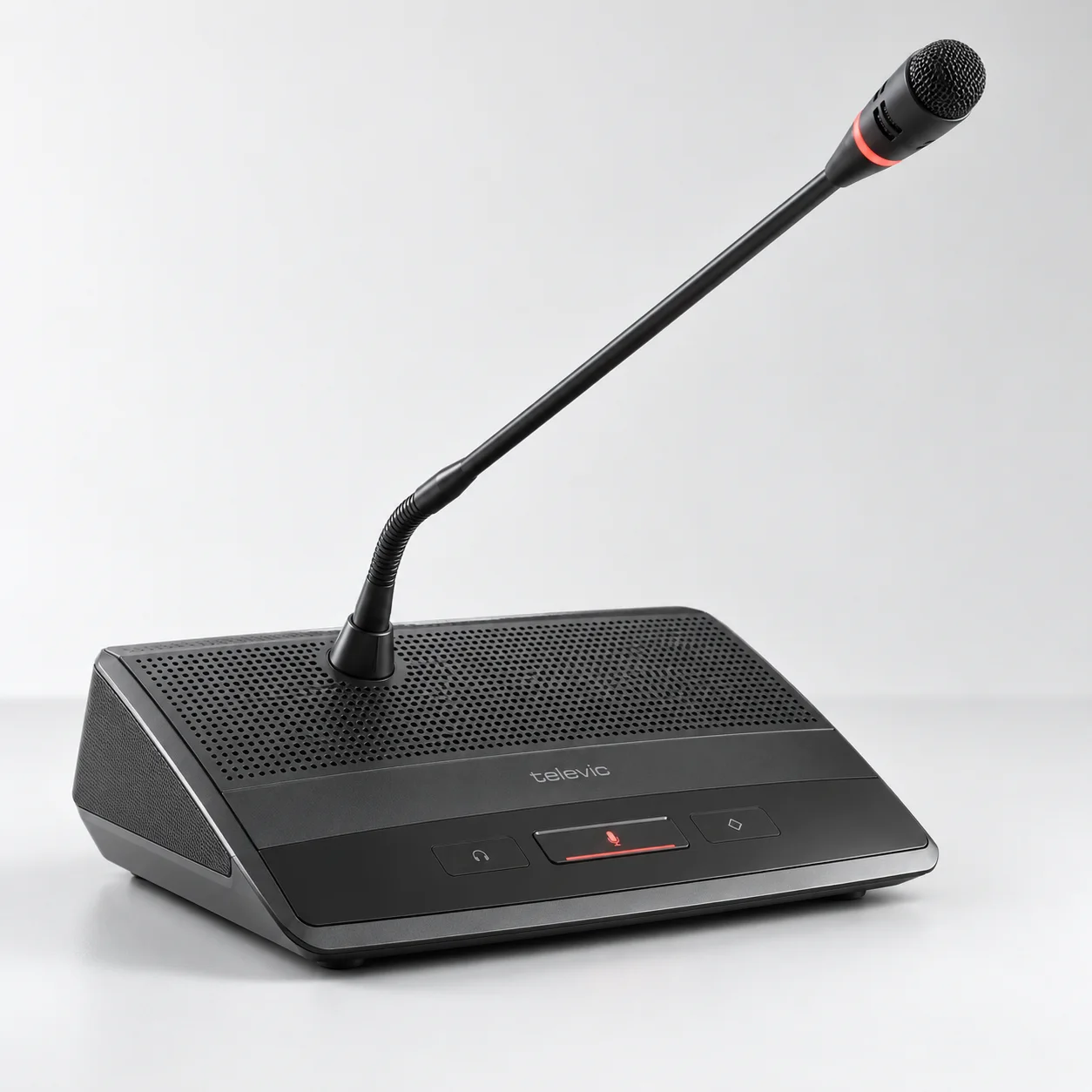
Televic

Confidea / Lingua / Plixus

  • Wired, wireless and integrated options
  • Interpreter-oriented Lingua desks
  • Language selection, identification and voting options
  • Networked architecture and redundancy options
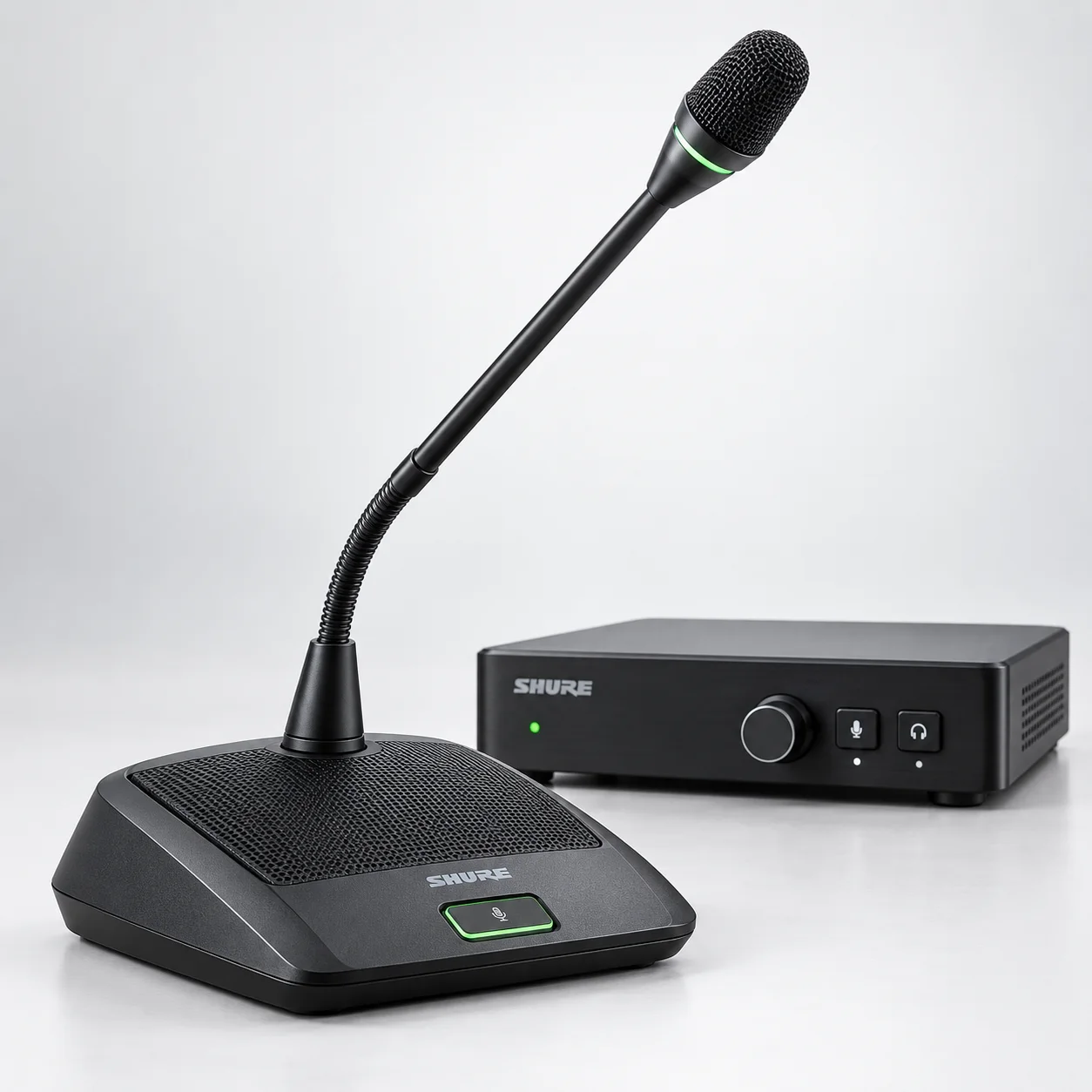
Shure

Microflex conference microphones

  • Conference microphones and speaking control
  • Installed or wireless options
  • DSP, recording and hybrid-room integration
  • Clean floor audio for interpretation
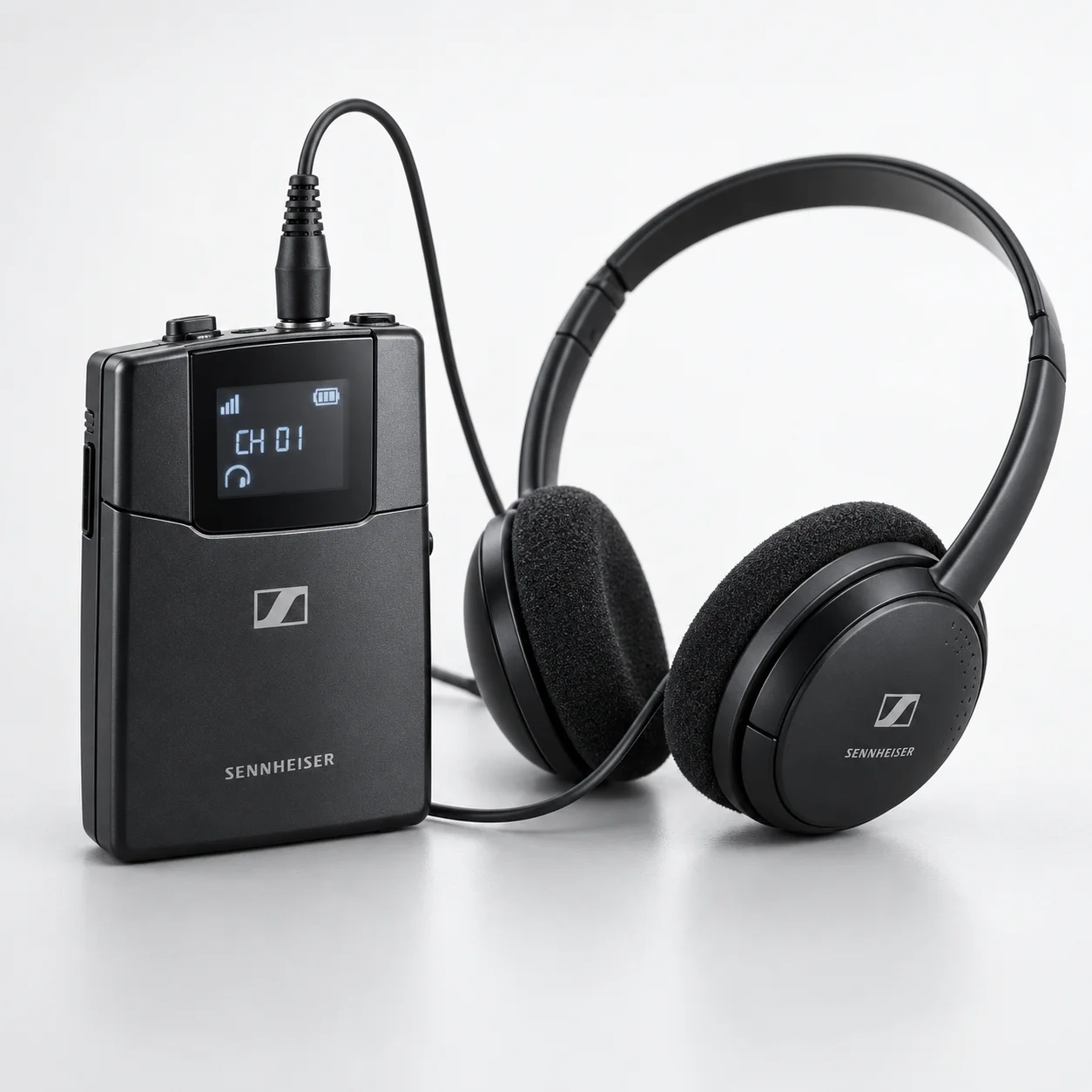
Sennheiser

Listening and accessibility

  • Personal listening and accessibility
  • Receivers/headphones for guided or assistive listening
  • Regional availability confirmed per project
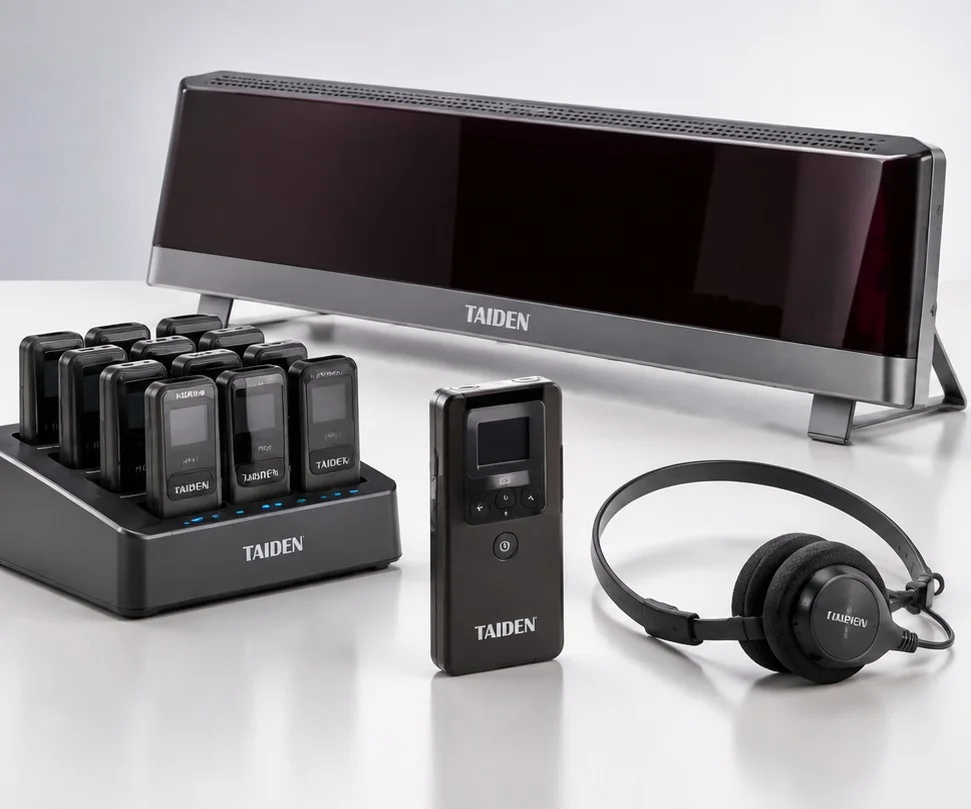
TAIDEN

Digital conference / interpretation

  • Conference, interpretation, voting and control families
  • Digital language-distribution options
  • Fixed or event architectures
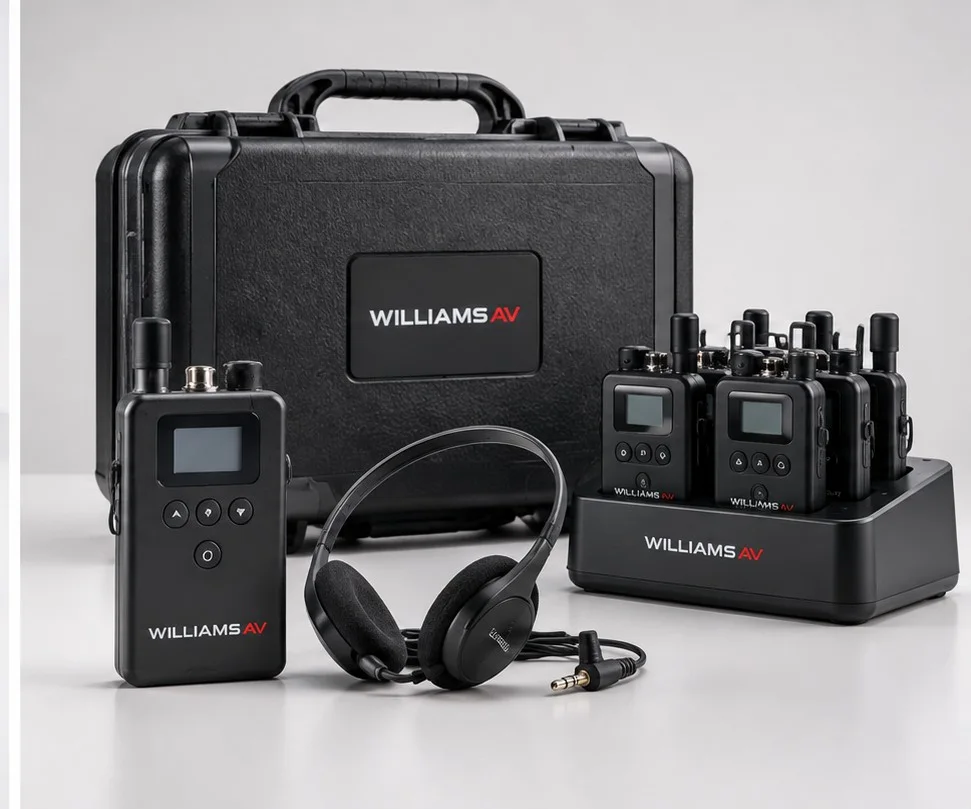
Williams AV

Assistive listening / interpretation

  • Portable or installed listening solutions
  • Transmitters, receivers and charging ecosystems
  • Accessibility and language-distribution uses

What Conference & Event Interpreting actually needs to get right

The assignment may include conference sessions, plenaries, panels, workshops and hybrid participation. The work is controlled around language combinations, team rotation, preparation material, booths or channels, sound and technical fallback. Those details determine who should handle the material, what references are needed and what must be checked before release.

What is in scope for Conference & Event Interpreting

We identify the actual material in scope—conference sessions, plenaries, panels, workshops and hybrid participation—and the audience or workflow it serves.

Where Conference & Event Interpreting can go wrong

Production is designed around language combinations, team rotation, preparation material, booths or channels, sound and technical fallback.

What remains under professional review in Conference & Event Interpreting

For Conference & Event Interpreting, automation may assist with repetitive handling or checks where it genuinely helps; meaning, ambiguity, risk, brand and approval decisions remain explicitly human-owned.

What a usable Conference & Event Interpreting delivery looks like

The Conference & Event Interpreting deliverable is checked in the form the client will actually use—publication, filing, integration, presentation, recording or internal operations—rather than only as extracted text.

What we need to know before conference & event interpreting starts

Send representative material for Conference & Event Interpreting, the target languages, intended audience or market, deadline, required output and any approved terminology or previous work. Also tell us what happens after delivery—publication, filing, integration, recording, print or internal use—because that determines the checks that matter.

Quote Conference & Event Interpreting around the real use case

A sound quotation for Conference & Event Interpreting should make the production path visible: what is included, which references are authoritative, what review level applies and what the finished deliverable will be. That prevents low headline pricing from turning into scope disputes later.

Get an Instant Quote